Meeting the Wild Goats of Dinorwig Slate Quarry
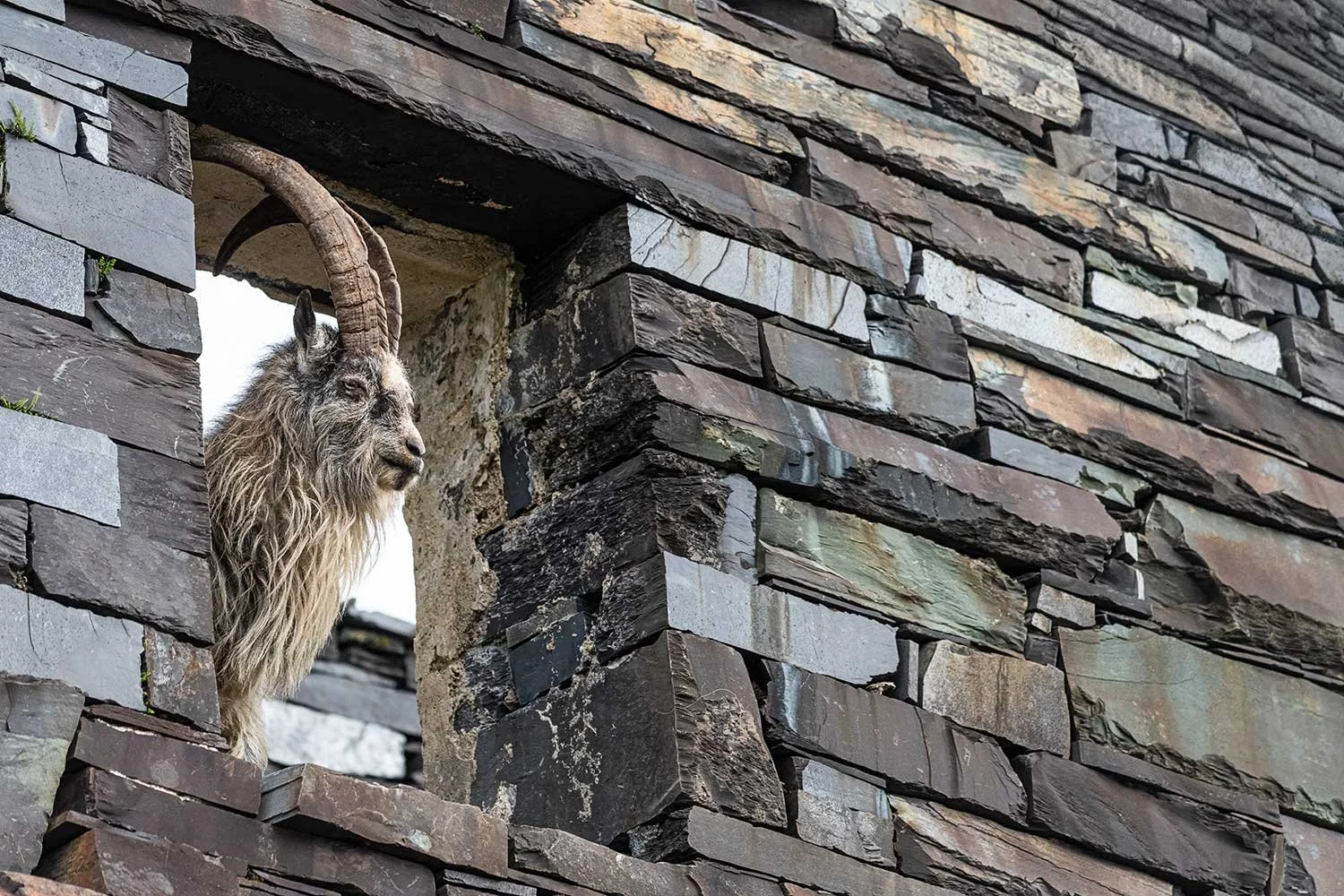
If you have ever explored the towering, monolithic terraces of Eryri National Park (Snowdonia), you know it is a place where history and nature collide in spectacular fashion. But nothing quite prepares you for stepping around a corner of abandoned industrial stone and finding yourself locking eyes with a prehistoric-looking beast.
On a recent trek through the dramatic landscapes of North Wales, I had an unforgettable, up-close encounter with the famous wild goats of Snowdonia. These aren't your average farm animals; they are the ancient, hard-as-nails rulers of the cliffs, and my encounter with them completely stole the show.
Here is what it is like to meet these incredible daredevils, the history behind them, and how you can spot them yourself.
The Epic Backdrop: Exploring the Historic Slate Terraces
To understand why this encounter felt so surreal, you have to understand the location. The ruins above Llanberis are a labyrinth of engineering marvels and sheer drop-offs. Because of the area’s rich history, you will see it referred to by two names: the historic English spelling, Dinorwic slate quarry, and the modern Welsh spelling, Dinorwig slate quarry.
Once the second-largest slate mine in the world, the site is a hauntingly beautiful grid of massive slate galleries, old miners' cottages, and rusted tramways slowly being reclaimed by nature. Today, the heavy machinery is long gone, replaced instead by rock climbers, hikers, and a very specific, incredibly hardy population of feral Welsh Mountain Goats.
Turning a Corner: The Encounter
The day was typical for North Wales—low mist clinging to the dramatic edges of Elidir Fawr and slick, dark stone underfoot. I was navigating one of the middle terraces of the Dinorwig slate quarry, filming the dramatic drop-offs, when a sharp, echoing crack shattered the silence. It sounded like a gunshot.
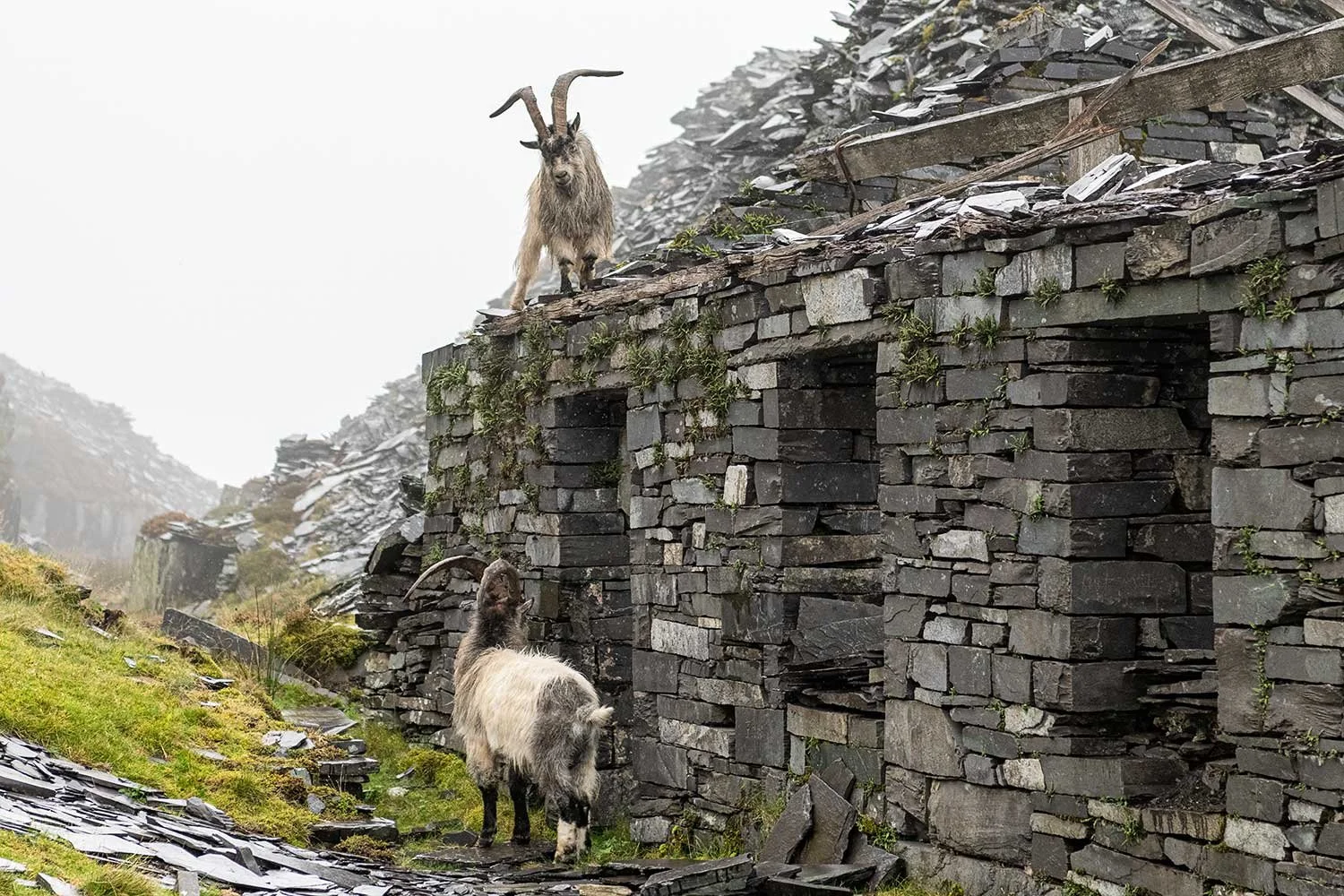
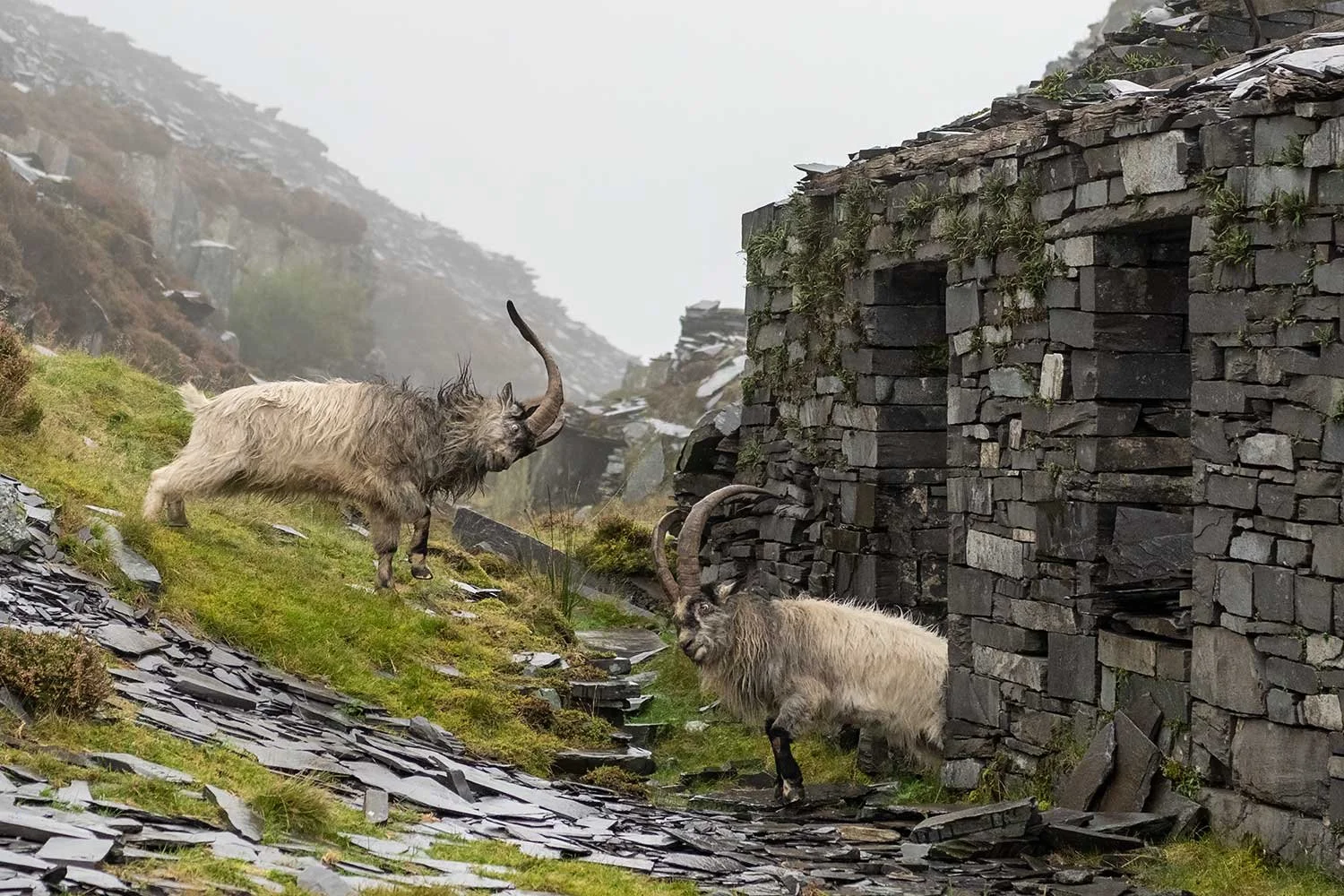
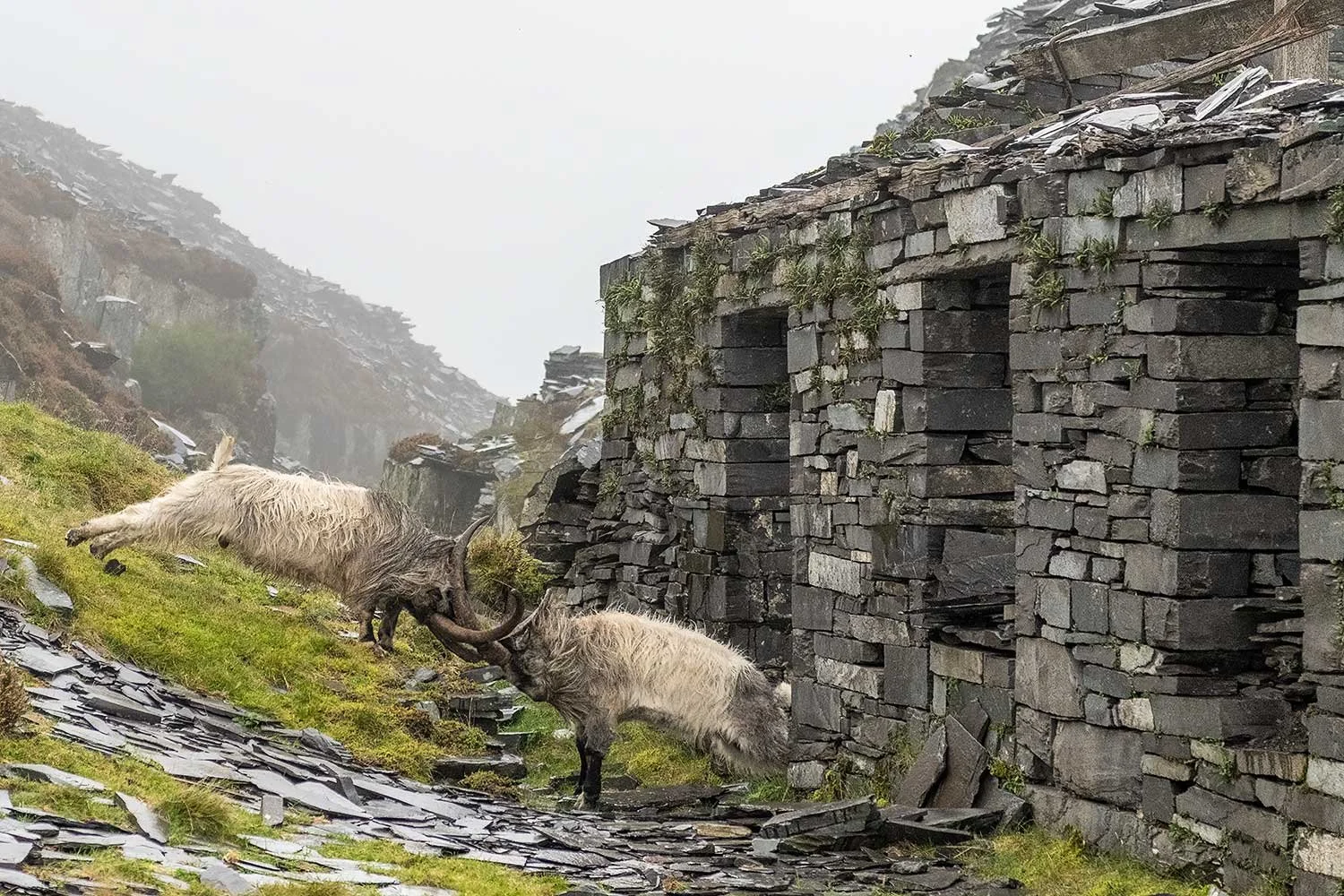
I stopped and looked up toward a crumbling, roofless industrial workshop. Standing right on top of the decaying stone wall were two massive billy goats, locked in a brutal, gravity-defying battle.
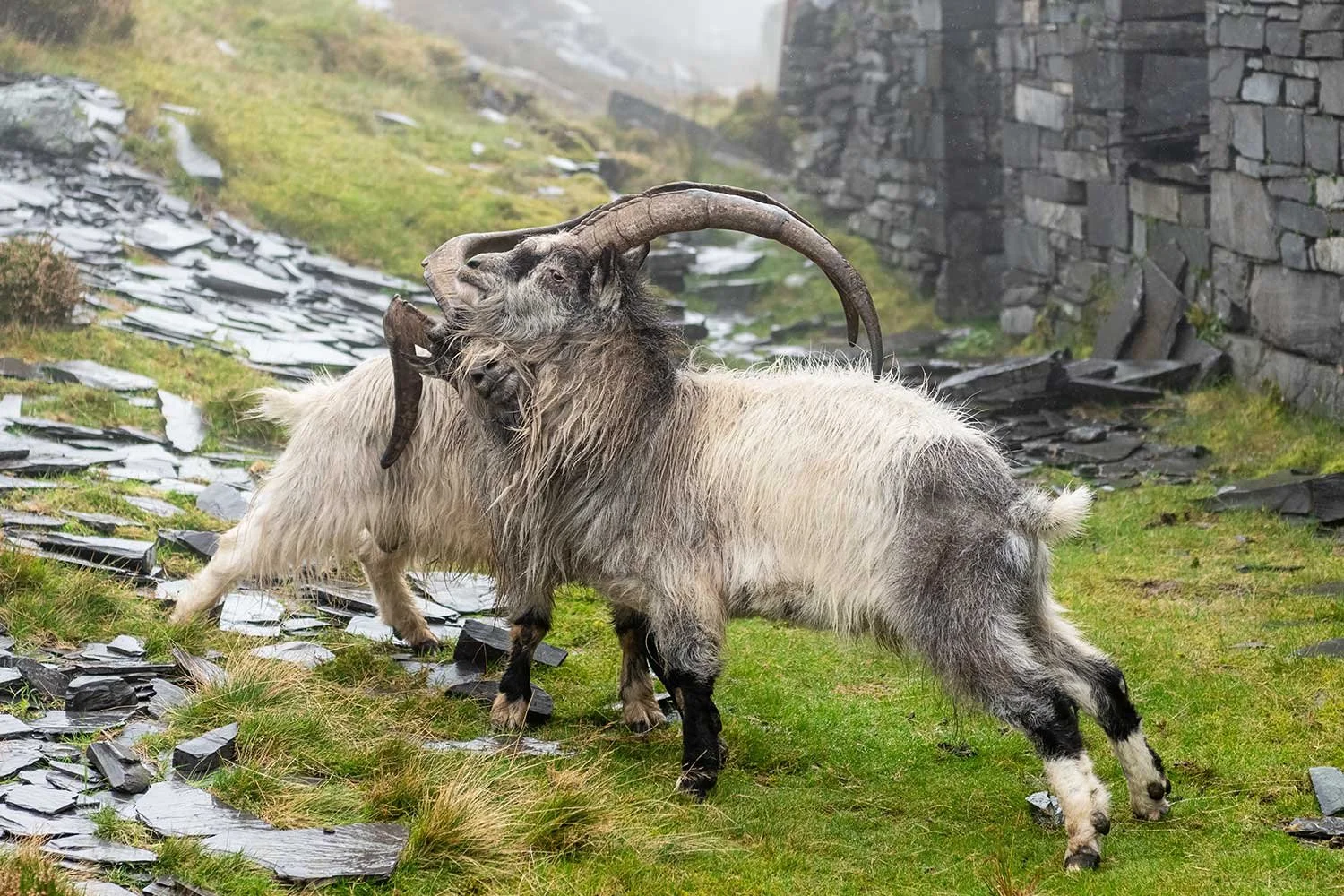
They were entering the annual autumn rut, and they had chosen the abandoned architecture of the Dinorwic slate quarry as their arena. With their sprawling, shaggy coats and enormous, sweeping horns, they looked less like common animals and more like mythical gladiators.
A Battle on the Edge
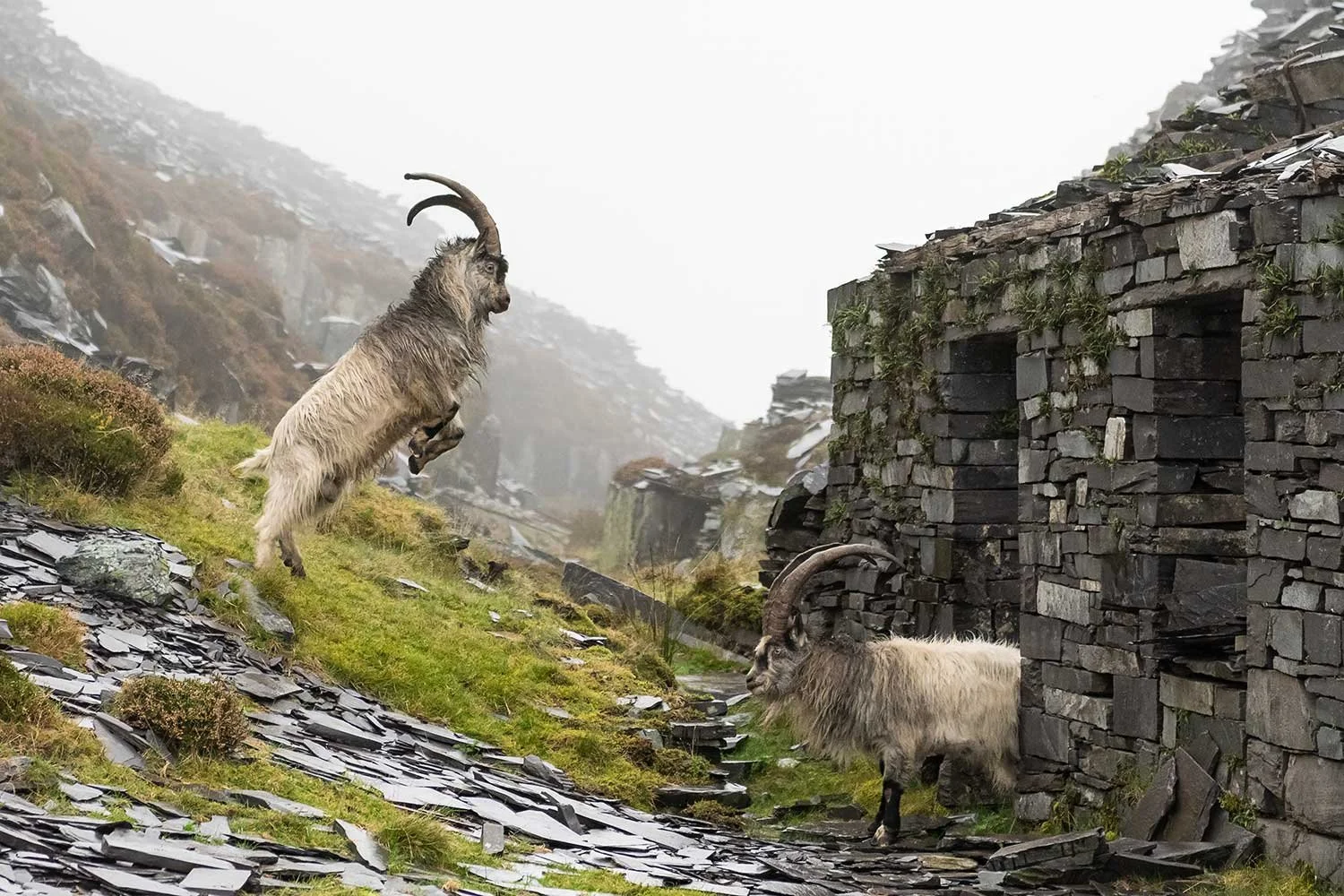
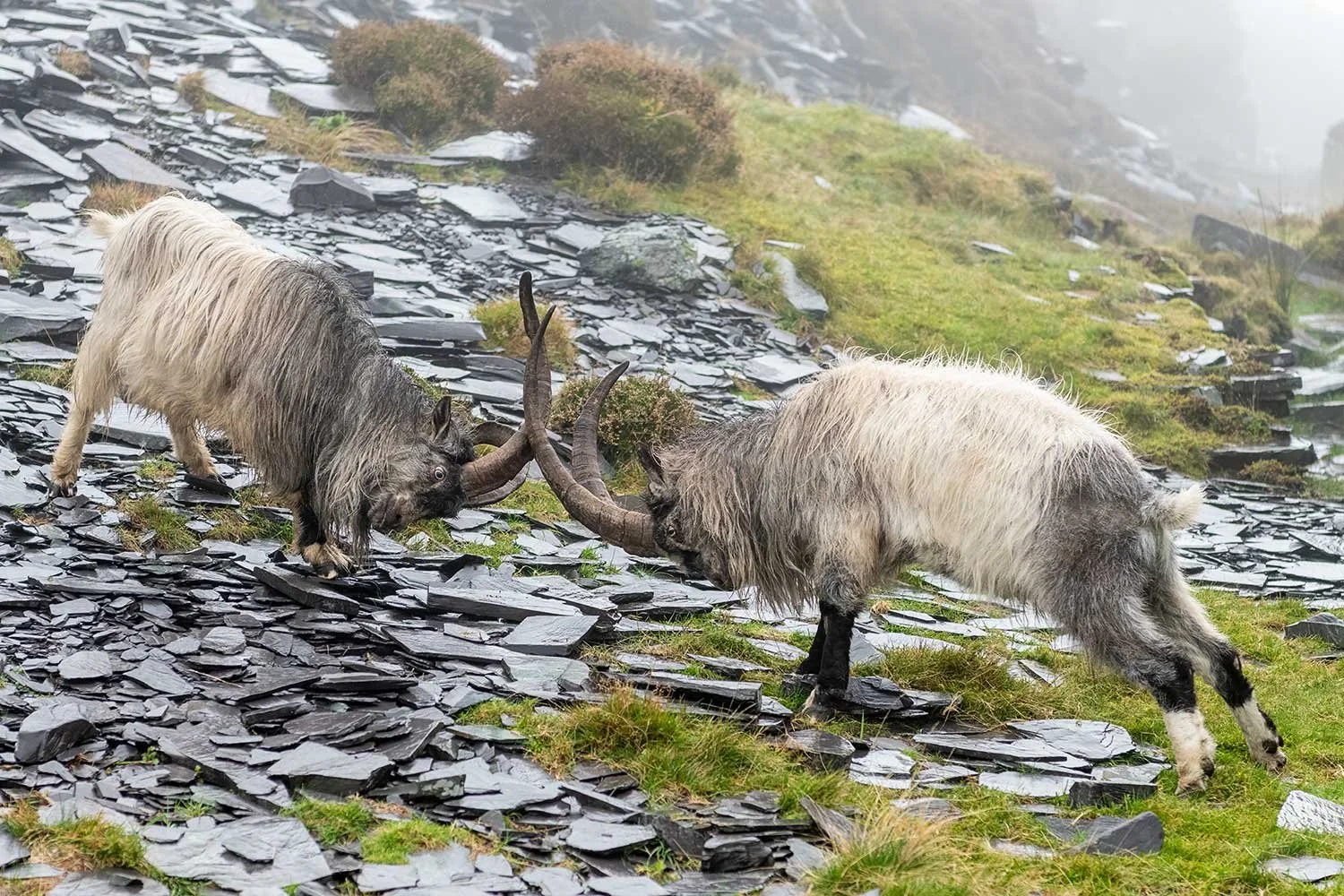
I watched, completely captivated, as the two billies reared up on their hind legs on the very edge of the stone structure. They slammed their heads together with immense force, the sound of their horns colliding echoing across the quarry galleries.
The battle didn't stay on the roof. They aggressively jostled for dominance, scrambling down a steep pile of internal slate scree and continuing the fight right inside the abandoned building. They traded blows amidst the rusted iron fixtures and historic masonry, completely unfazed by the precarious drops or the jagged stone surrounding them.
Behind them, seeking shelter within the deeper recesses of the old machinery shed, was the rest of their herd. A few nanny goats and skipping kids watched the showdown calmly. Watching the rivals move was dizzying. Slopes and ledges of loose slate that would leave a human scrambling on all fours were nothing more than a tactical playground to these animals. They pivoted, clashed, and bounded across the slippery stones with a casual grace that defied gravity
The Secret Biology: How the Goats Survive the Slate
Seeing these animals navigate the hazardous terrain of the Dinorwic slate quarry makes you realize how perfectly adapted they are to this harsh environment.
Biologists and historians believe these feral herds are living links to the Neolithic era, with ancestors roaming the mountain ranges of Wales since at least 4500 BC. Over thousands of years, they have evolved highly specialized traits to thrive on the rugged rock faces:
Specialised Hoof Pads: The bottom of their hooves feature soft, rubbery grip pads that act like natural climbing shoes, grabbing onto the slickest wet slate.
Curved Toenails: Their outer hooves are hard and shape naturally into curved ridges. This allows them to hook into tiny imperfections in the rock walls.
Extreme Agility: They have a low center of gravity and lateral agility that allows them to bound horizontally across rock faces, escaping predators (and avoiding bad weather).
During the autumn months, the quarry turns into a literal battleground. The male billies enter the annual rut, charging and clashing their massive horns together on the edges of the slate cliffs to fight for dominance over the females.
How to Spot the Goats of Dinorwig Safely
If you are planning an adventure to the Dinorwig slate quarry, getting a glimpse of the herd is highly likely if you know where to look. They frequently seek shelter in the old industrial buildings, deep mining tunnels, and lower oak woodlands surrounding Llyn Padarn.
However, as tourism to the area grows, the goats are facing habitat pressures. If you want to experience them responsibly, keep these rules in mind:
Keep Your Distance: Use a zoom lens on your camera rather than trying to approach them. A cornered billy goat with three-foot horns can be incredibly dangerous.
Do Not Feed Them: They are wild, foraging animals. Feeding them alters their behavior and encourages them to wander down into nearby villages like Llanberis.
Stick to the Paths: Wandering blindly off-trail to chase a goat sighting can cause slate landslides, destroying their shelters and putting you in danger of falling.
Final Thoughts
Hiking through the Dinorwic slate quarry is always a humbling experience because of its scale, but sharing the space with its feral wildlife adds a whole new layer of magic. The goats are a living testament to nature’s ability to reclaim what humans leave behind.
If you get the chance to visit Eryri, keep your ears open for the sound of shifting stone—you might just be sharing the terrace with a piece of prehistoric Welsh history.