Scotland Landscape Photography - capturing stunning scenery
Scotland landscape photography is a dream for photographers seeking dramatic scenery, moody light and wild, untouched terrain. From the jagged peaks of the Isle of Skye to the sweeping curves of Assynt and the rugged valleys of Glencoe, the Highlands offer endless opportunities to elevate your landscape work. Below are practical, easy-to-apply tips specifically tailored to these iconic locations.
Chase Golden Hour for Maximum Impact
The North West Highlands of Scotland more than most places come alive during sunrise and sunset, especially in the autumn & winter months. These softer light windows add richness, depth and drama to your images and give you a great opportunity to not only capture the stunning scenery at its best but also, if you’re lucky, have the chance to spend time as these amazing locations all on your own.
In Glencoe the Three Sisters and Buachaille Etive Mòr are spectacular when lit by early morning side light.
In the remote area of Assynt the low sun enhances the distinct shape of Suilven, giving your compositions a warm glow, just amazing to see.

A beautiful autumn sunrise at the classic viewpoint of Buachaille Etive Mor in Glencoe Scotland

Amazing colours on Suilven at sunrise in Assynt Scotland from Elphin Bothy
Use Atmospheric Weather to Your Advantage
Scotland’s famously changeable weather can transform an ordinary scene into something cinematic. Mist, drizzle, rolling clouds and rain create mood and depth—perfect for landscape photography.
In Glencoe, weather fronts often pass through the mountain scenery creating dynamic contrast against dark mountains.
A rainy morning at Loch Maree is the perfect time to capture images a little more unique, there’s always the chance of a rainbow!
Don’t wait for perfect blue skies - your best images often come from imperfect weather.

Strong winds blow rain clouds through Glencoe
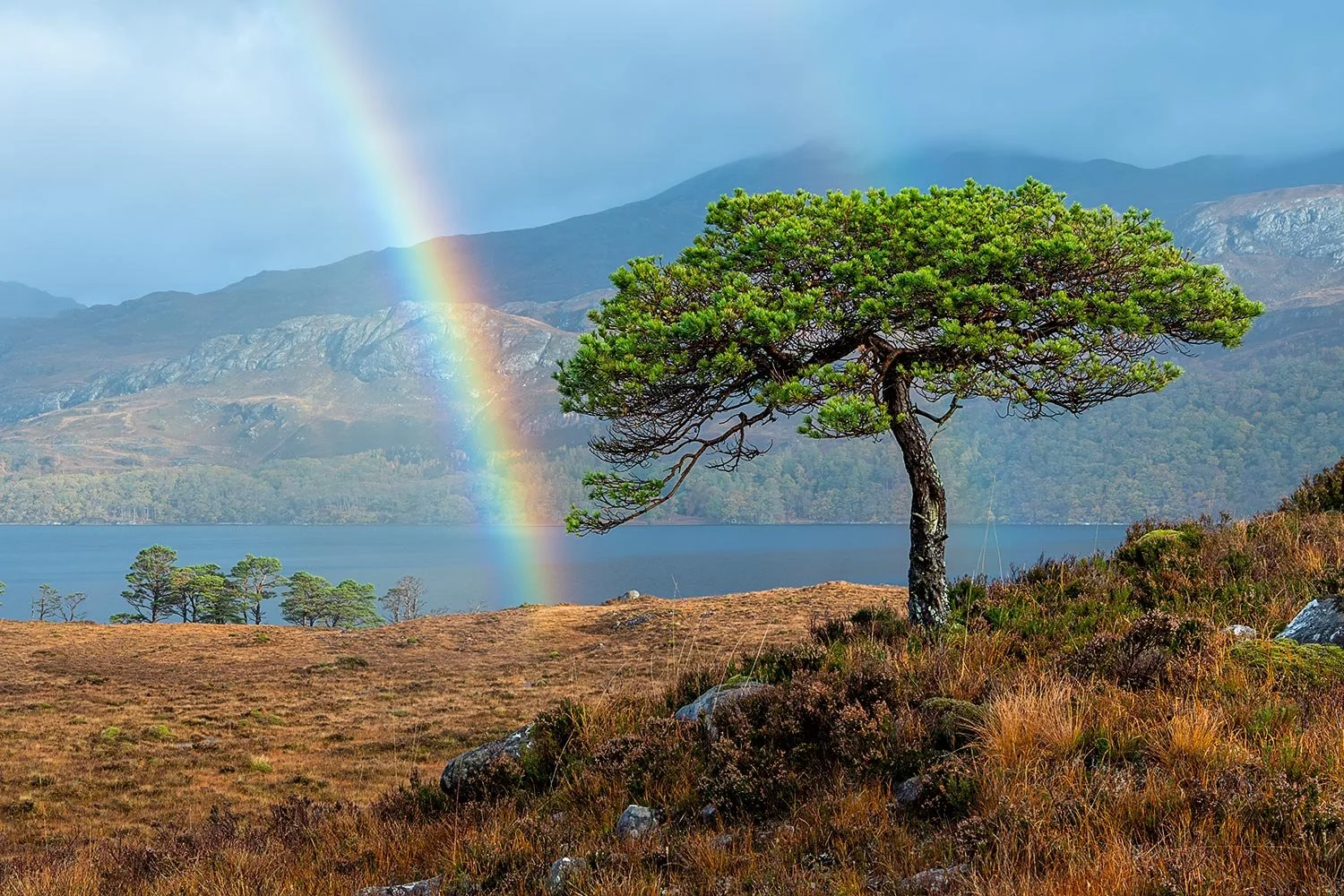
Passing rain showers at Loch Maree give the chance of capturing beautiful rainbows
Build Strong Compositions with Foreground Elements
Foreground interest is essential for adding depth and guiding your viewer’s eye. Look for:
Rock formations
Heather, grasses and wildflowers
Rivers and lochs
Winding single-track roads
The River Coe flowing through the narrow pass of Glencoe creates some fantastic countours in the rocks and visiting waterfalls like Wailing Widow Falls in Assynt creates an opportunity for really powerful leadin lines to add depth to your images.
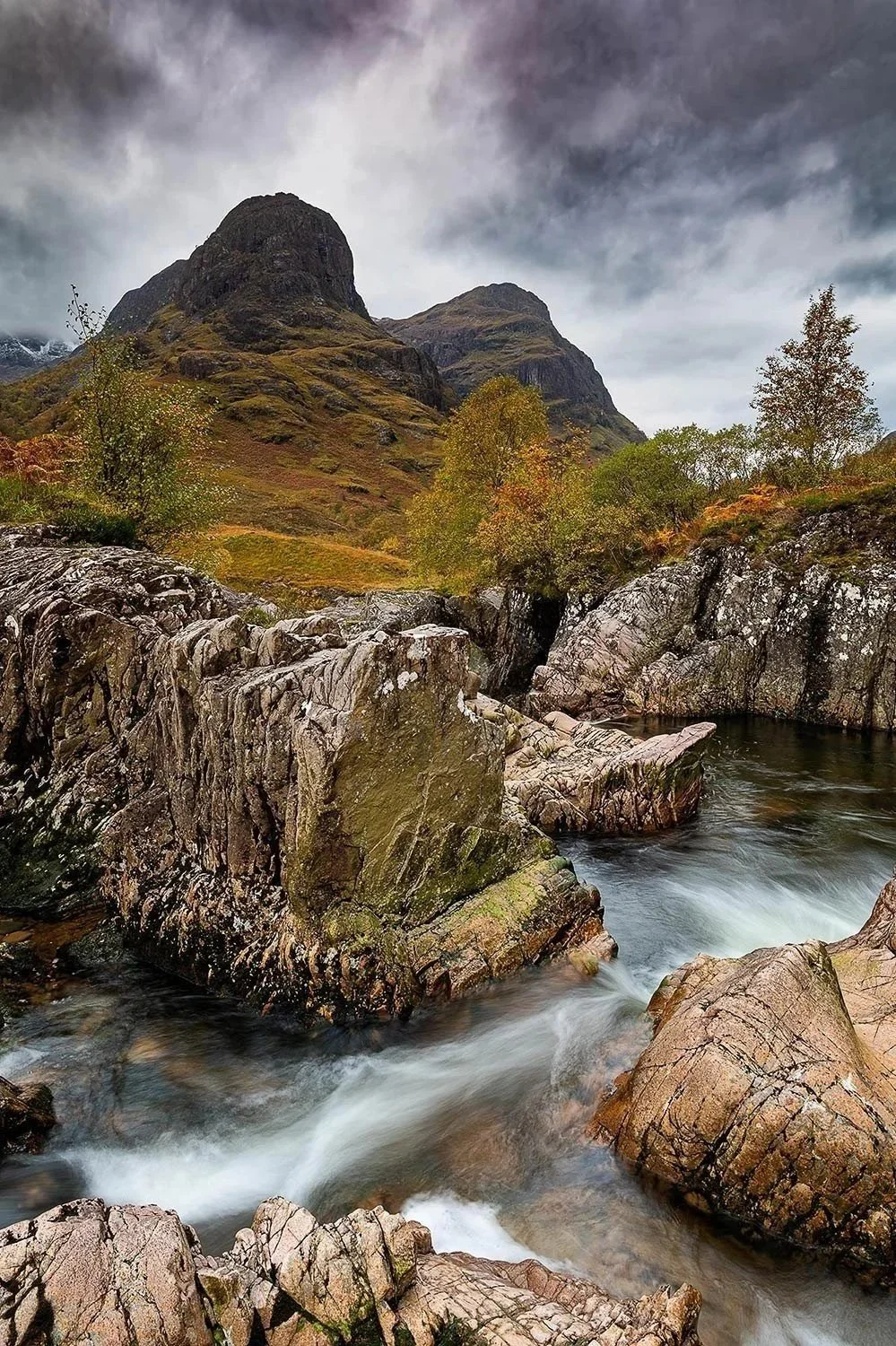
The 'S' bends with views of the 3 Sisters in Glencoe
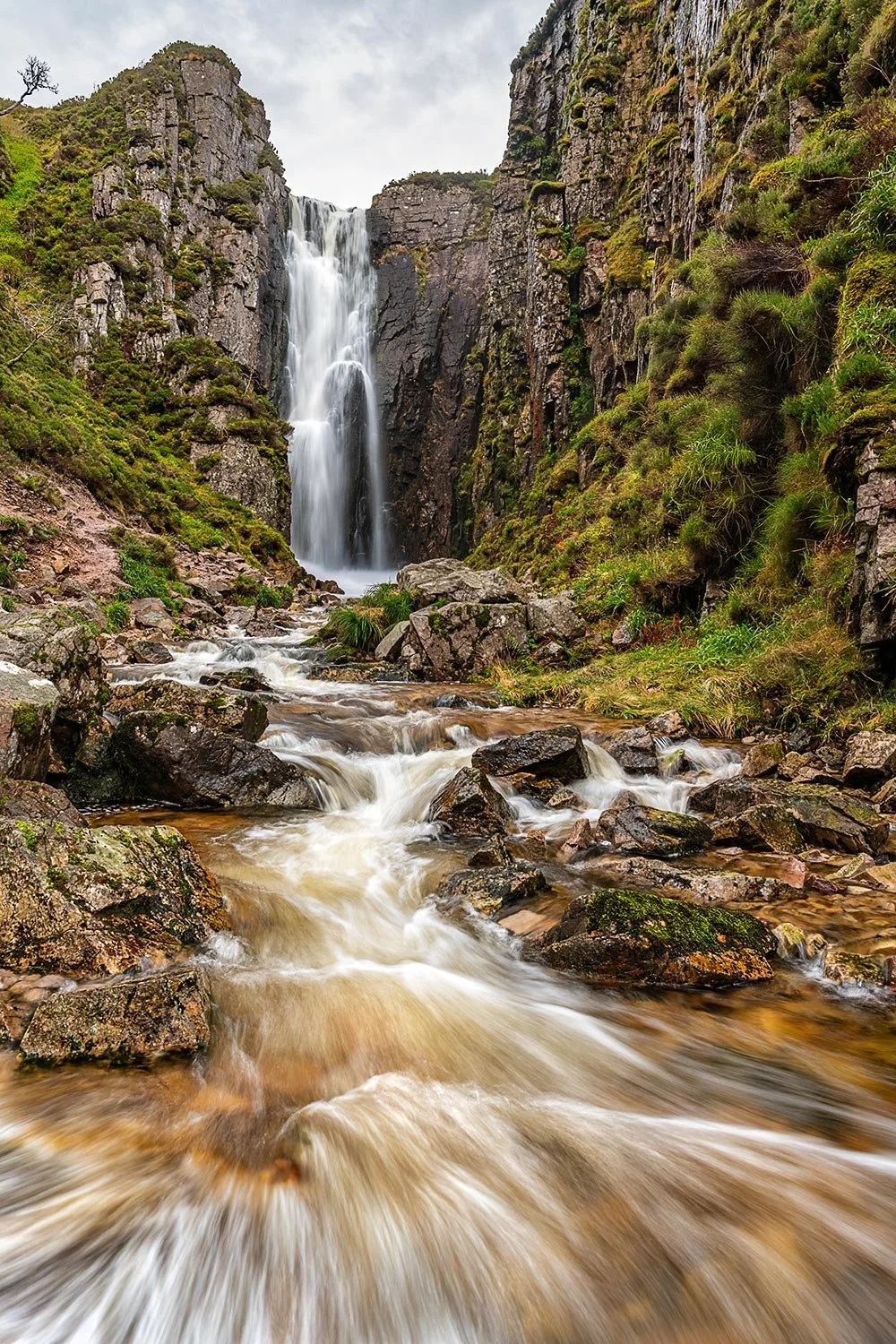
Heavy rain creates stunning foreground interest at Wailing Widow Falls in Assynt
Dramatic weather conditions translate beautifully to B&W
Landscape photography in Scotland is notorious for its challenges with the weather but Black & white photography is an incredibly powerful way of empasising the drama of the landscape, even when the light abandons you. There are few tips that can help your monochrome images really have impact:
Look for Strong Contrast as Black & white images thrive on tonal separation so compose scenes with clear lights and darks, backlighting, side lighting, and dramatic shadows.
Prioritise Shapes, Lines & Textures - without color, composition relies heavily on structure so include strong leading lines and geometric shapes (mountains, rock formations, cliffs).
Use the “Black & White Mindset” while shooting - try to visualise in monochrome by looking at luminance, not hue.
Pay attention to the sky - Skies are crucial in blank & white landscapes as dramatic clouds add texture and depth. If the sky is blank and dull, consider cropping it.
Long exposures create minimalist drama, often know as “Fine Art photography” - Simplicity can be striking: smooth water, blurred clouds, or moving foliage contrast with solid, sharp elements.
Split Rock at Clachtoll beach in Assynt is a great place to photograph if the clouds move in, likewise the unique geology of Bow Fiddle Rock on the Moray coast makes it a striking image even without the light of a dramatic sunrise.
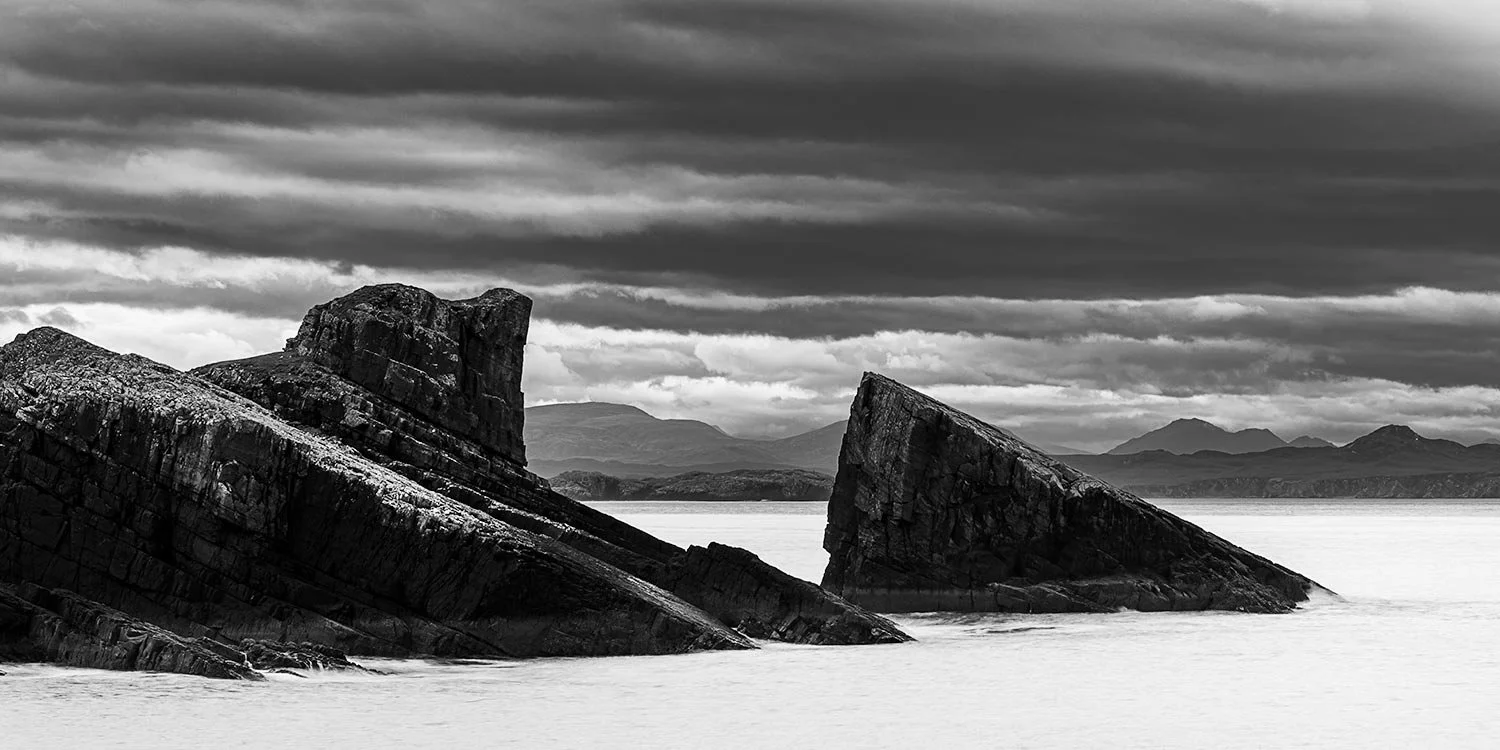
Heavy cloud & little light at Clachtoll beach near Lochinver make perfect condition for black & white images

A black & white long exposure photo of Bow Fiddle Rock on the Moray coast, Scotland
Carry the Right Gear for Highland Conditions
The wind and rain can be challenging, so prepare well:
Tripod: A sturdy one is essential in exposed locations.
Wide-angle lens: These can produce dramatic images but need careful use as it’s quite easy to end up with a photo that’s all foreground
ND and polarising filters: Great for smoothing water, balancing skies and enhancing colours and I also use mine quite often for reducing glare on the surface of the lochs or sea.
Lens cloths: You’ll use them constantly especially trying to photograph a waterfall in howling winds.
Don’t forget…. protect yourself from the elements too. Warm and waterproof clothing are invaluable (I’m a Goretex fan myself), you’re not going to be out long with the camera if you’re wet & cold! Also my tip for Scotland landscape photography is take a good pair of waterproof wellies with you, it’s wet and muddy pretty much everywhere you go.
Scout Your Locations Before Shooting
Researching ahead of time saves stress and helps you arrive at the best angles for sunrise or sunset. Use maps, satellite views, or even visit the day before - an ideal chance to do something useful on a day when the light or weather perhaps are kind enough to give to decent photo opportunities.. Popular spots like the Quiraing and the Old Man of Storr on the Isle of Skye and my favourite sunrise hike so far, to the summit of Stac Pollaidh in Assynt, require varying amounts of walking — knowing the routes helps you avoid rushing in low light and phone apps such as Alltrails can be invaluable if you’re heading out in the dark in time to photograph a sunrise.
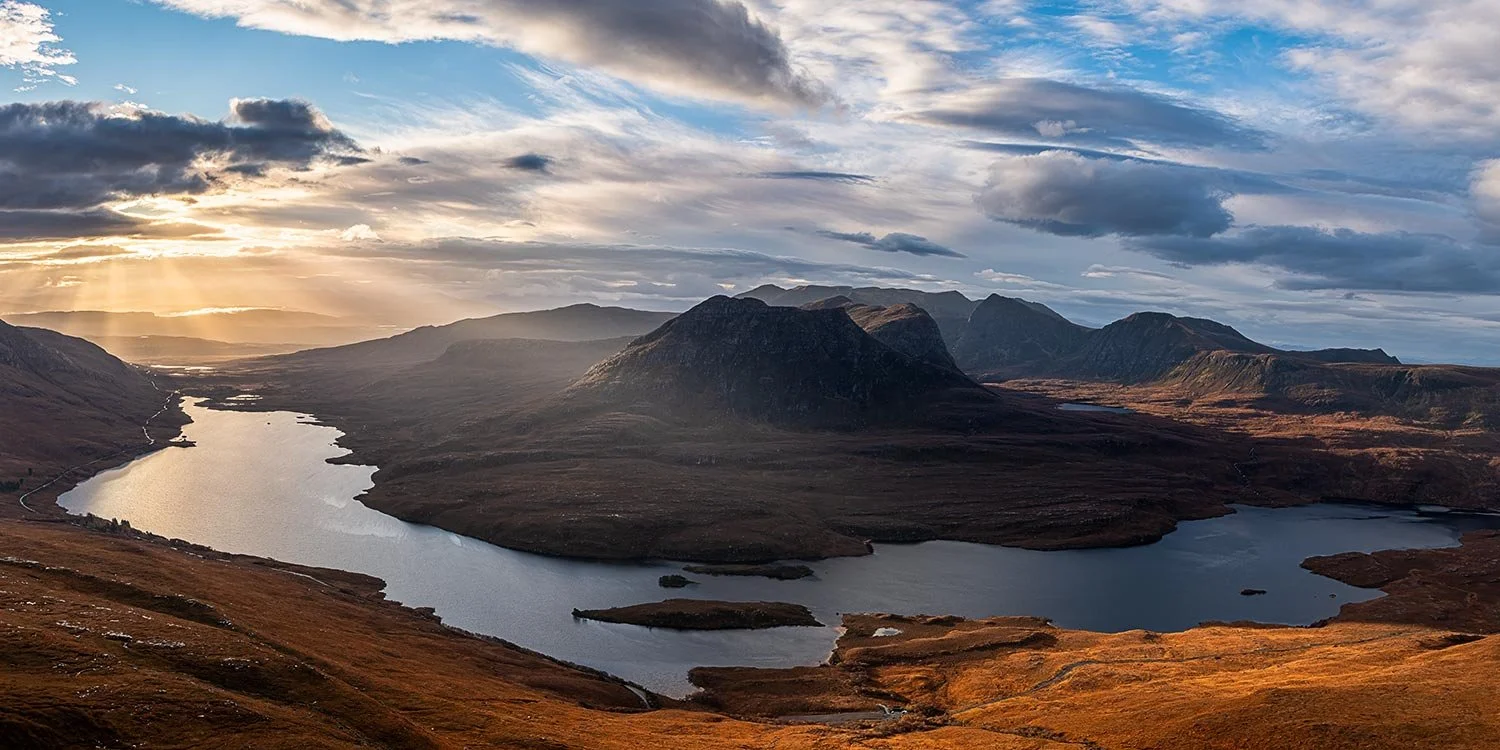
A stunning sunrise from the summit of Stac Pollaidh
Protect and Respect the Landscape
The Highlands of Scotland are beautiful but fragile. Stick to designated paths, avoid disturbing wildlife and always follow Leave No Trace principles. Scotland’s scenery is part of what makes your images so impactful - treat it carefully and don’t spoil it for the next person who wanders along to admire its beauty.
Browse All The Photography Galleries

Eryri Snowdonia Photos
Anglesey Photos
North Wales Photos
Yorkshire Dales & Lake District Photos
UK Coast & Country Photos