Explore The Best Beaches in North Wales To Photograph
North Wales is home to some of the most breathtaking coastal landscapes in the UK, making it a dream destination for photographers of all levels. From dramatic cliffs and sweeping sandy bays to hidden coves and iconic lighthouses, the region offers endless opportunities to capture stunning seascapes in every season. In this guide to the best beaches in North Wales to photograph, we’ll explore must-visit locations, share expert photography tips, and help you discover the perfect spots for sunrise, sunset, and long-exposure shots. Whether you're shooting with a DSLR, mirrorless camera, or smartphone, these North Wales beaches will inspire your next unforgettable image.

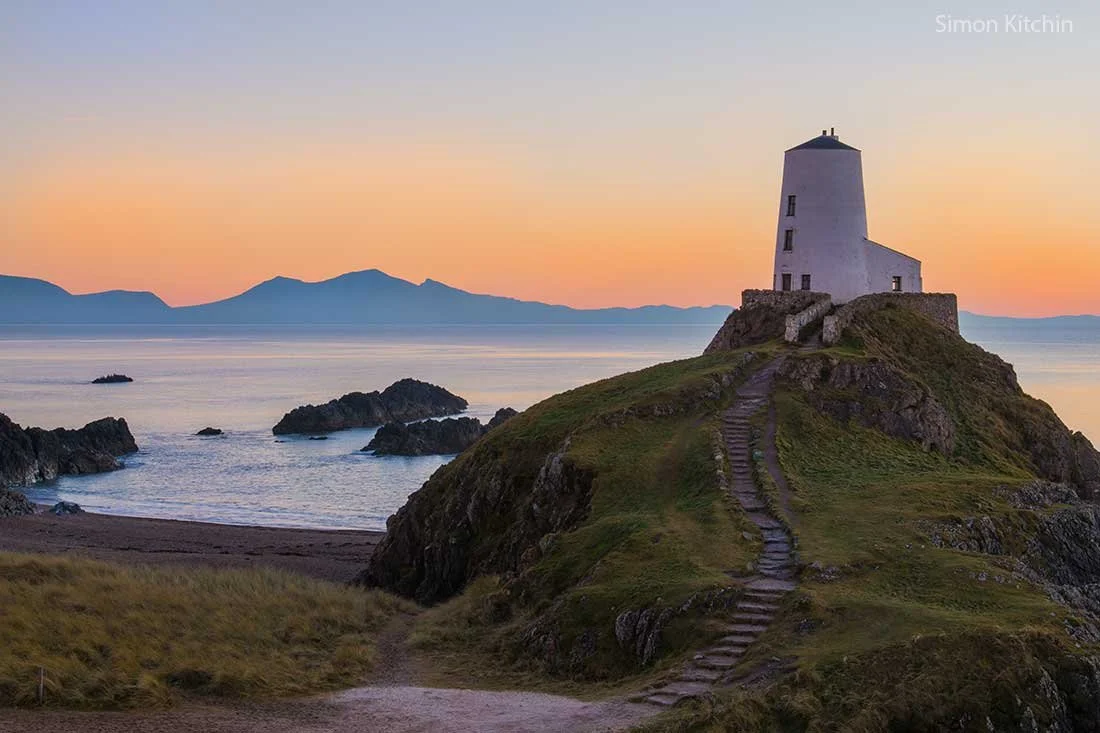
Stunning sunset at Twr Mawr Lighthouse, Anglesey

Abersoch Harbour beach at sunrise
Llanddwyn Beach & Llanddwyn Island, Anglesey
Llanddwyn Beach and the tidal headland of Llanddwyn Island offer some of the most diverse and rewarding photography opportunities in North Wales, combining sweeping sandy bays, dynamic dune systems, and iconic coastal landmarks. The approach across the beach is a shoot in itself, with rippled sands, marram grass, and reflective pools at low tide creating perfect foreground interest, while views stretch across to the mountains of Eryri on clear days. Tŵr Mawr Lighthouse is the standout subject, perched dramatically on the island and widely regarded as one of Wales’ most photogenic coastal scenes, especially at sunset when warm light hits the rocks and sea. Nearby, the historic pilot cottages, smaller lighthouse, and ruins of St Dwynwen’s church add storytelling elements and layered compositions for landscape photographers.
How to get to Llanddwyn:
Access is via the Newborough Forest car park (postcode LL61 6SG), where charges apply and facilities are available; from here, it’s a scenic 30–40 minute walk through forest trails and across the beach to reach the island. Follow the A55 onto Anglesey, then take the A4080 towards Newborough and follow brown tourist signs to the main car park. It’s important to plan around the tides, as the island becomes cut off at high water, and allowing extra time for the walk—particularly if you’re aiming for sunrise or sunset photography—is essential for capturing this iconic location at its best.

Stunning golden sands on Llanddwyn Beach, one of the best beaches in North Wales

Dramatic reflections on the beach at Llanddwyn
Talacre Beach
Talacre Beach, on the north coast of Flintshire, is a standout location for coastal photography, best known for the iconic Talacre Lighthouse rising from the sands near the Point of Ayr. This striking, weathered lighthouse makes a powerful focal point, particularly at sunset when the sky often glows behind it, or during moody conditions when dramatic clouds roll in from the Irish Sea. The wide, flat expanse of beach is perfect for minimalist compositions and long-exposure photography, with wet sand at low tide creating beautiful reflections and leading lines toward the lighthouse. Sand dunes and grassy textures along the shoreline also provide foreground interest, while the ever-changing tides offer different perspectives throughout the day—though note that the lighthouse itself is offshore and not safely accessible.
How to get to Talacre beach
Access is straightforward, with parking available at the main Talacre Beach car park (CH8 9RD) near the village of Talacre. From the car park, it’s a short, easy walk over the dunes via marked paths directly onto the beach, making it one of the more accessible photography spots in North Wales. Follow the A55 towards Holywell, then take the A548 towards Talacre and follow local signage. Facilities, including toilets and seasonal refreshments, are usually available near the car park. As with all coastal locations, checking tide times is essential—low tide offers the best conditions for photographing the lighthouse with leading lines and reflections, while high tide brings a more dramatic, wave-focused scene.
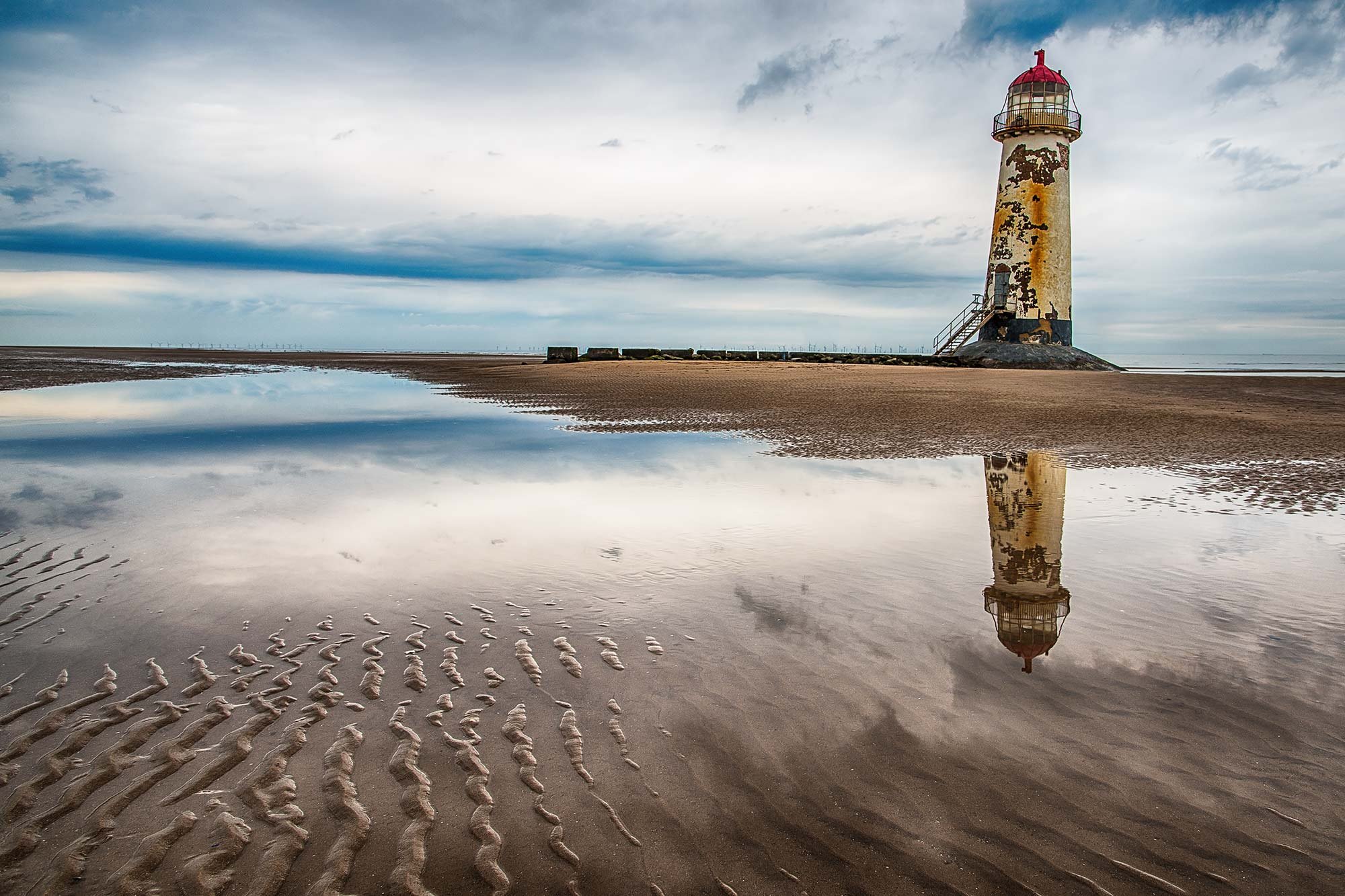
A day of moody light at Point of Ayr lighthouse on Talacre Beach
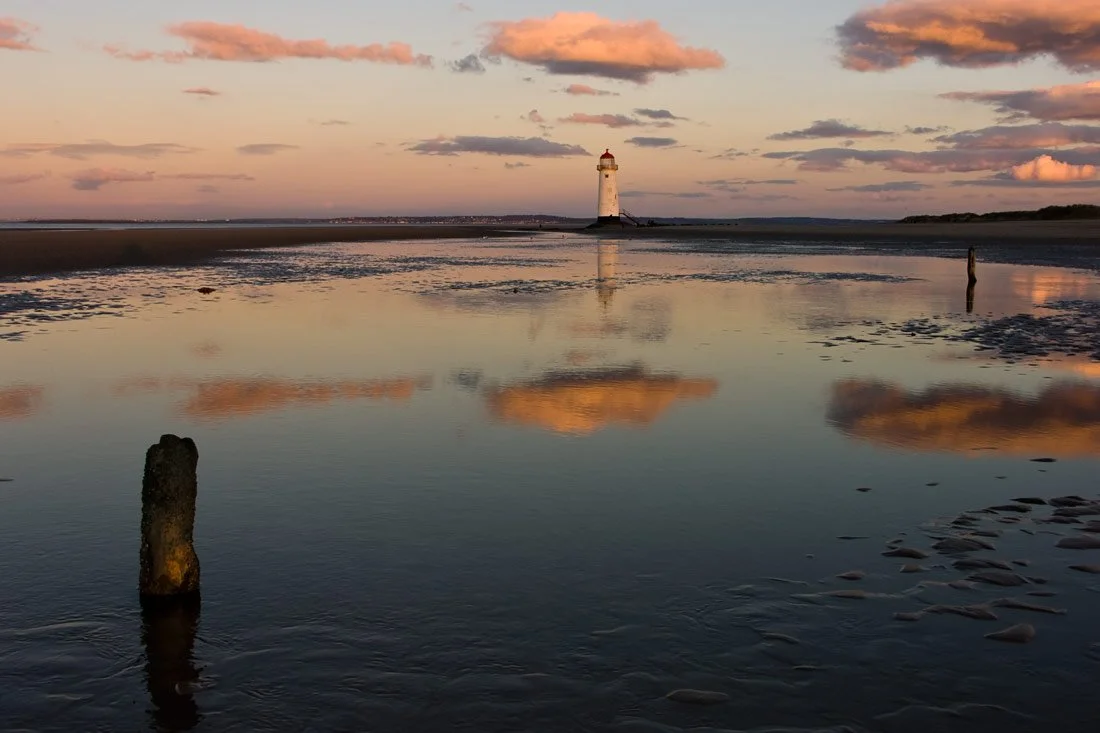
One of the best beaches in North Wales, sunrise at Talacre
Dinas Dinlle
Dinas Dinlle Beach, on the north-west coast of Gwynedd, offers a rich mix of natural beauty and historical intrigue, making it a fantastic location for landscape photography. The long, gently curving shoreline provides clean leading lines and expansive views across Caernarfon Bay toward the Llŷn Peninsula, with particularly striking light during sunrise and sunset when the sky reflects off wet sand and shallow tidal pools. One of the most distinctive features is Dinas Dinlle Hillfort, an Iron Age promontory fort perched above the beach, which adds a dramatic elevated viewpoint and a strong compositional anchor. Photographers can capture everything from minimalist seascapes and long-exposure wave movement to more layered shots incorporating pebbled textures, grassy dunes, and the hillfort overlooking the coast. The beach is less affected by tides than some locations, but checking conditions is still worthwhile—calmer days work well for reflections and soft light, while windy conditions can create more dramatic wave action for dynamic shots.
How to get to the beach at Dinas Dinlle
Access is easy and convenient, with parking available right next to the beach along Dinas Dinlle’s seafront (postcode LL54 5TW), making it one of the more accessible coastal photography spots in North Wales. From the A55, follow signs toward Caernarfon and then take the A499 toward Pwllheli, turning off toward Dinas Dinlle and following local signage to the beachfront. There are cafés and basic facilities nearby, which is helpful for longer shoots.

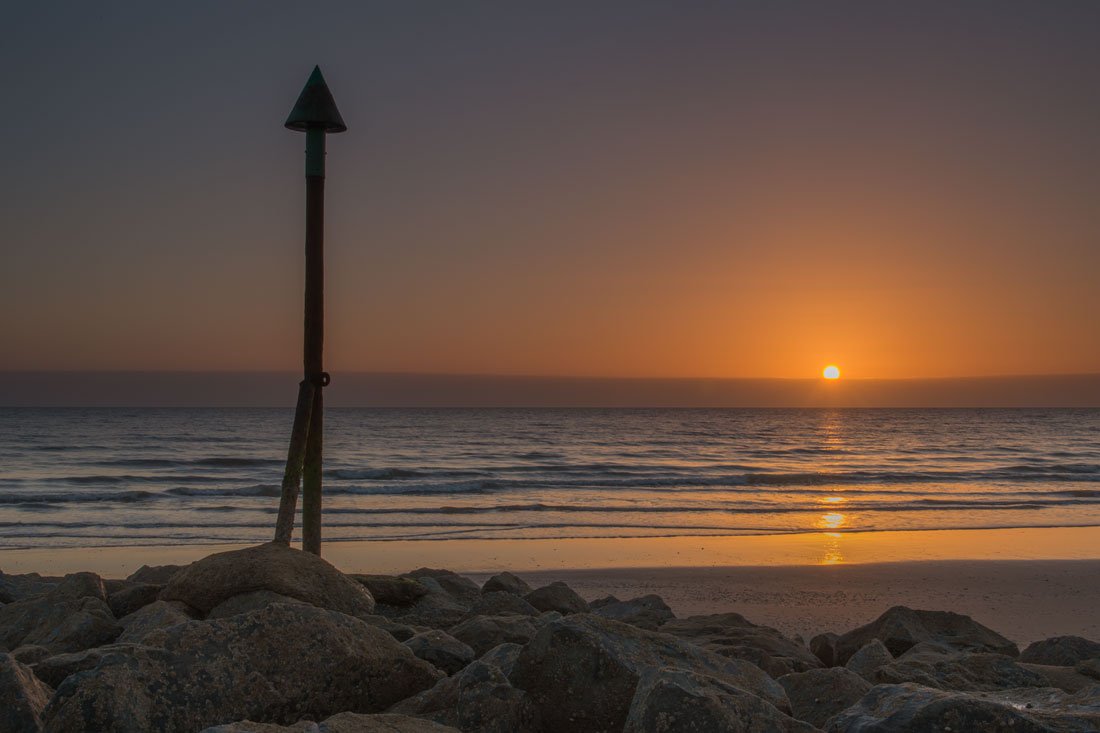
Abersoch and Llanbedrog beaches, Llŷn Peninsula
Abersoch Beach, on the south coast of the Llŷn Peninsula, is a versatile and visually rich location for photography, offering a mix of sweeping coastal views, vibrant seaside atmosphere, and ever-changing light. The main stretch, Abersoch Beach, is perfect for capturing colourful beach huts, sailing boats, and clean compositions with Snowdonia’s distant peaks occasionally visible across the bay on clear days. For more dramatic scenery, head toward Llanbedrog Beach just nearby, where the iconic colourful beach huts and the wooded headland provide strong focal points and depth. Sunrise works particularly well here for softer light and calmer conditions, while sunset can produce warm tones reflecting off the water and sand. Long exposures, lifestyle shots, and classic seascapes all work well, making Abersoch ideal for a range of photographic styles. Tides play an important role here—low tide reveals more expansive sands and reflections, while high tide brings boats closer inshore for added interest in compositions.
How to get to Abersoch
Parking is straightforward, with several pay-and-display car parks in and around Abersoch village (postcode LL53 7EF), many within a short walking distance of the beach. From the A55, follow signs toward Pwllheli via the A499, then take the A497 before turning onto the B4413 directly into Abersoch, where local signage will guide you to parking areas near the shoreline. Facilities are plentiful, including cafés, shops, and toilets, making it a convenient base for extended photography sessions.
How to get to Llanbedrog
Access to Llanbedrog Beach is straightforward and well signposted, making it an easy addition to any Llŷn Peninsula photography trip. The main parking area is the National Trust car park (postcode LL53 7TR), located just above the beach and equipped with basic facilities. From the A55, follow the A499 toward Pwllheli, then join the A497 before turning onto the B4413 toward Abersoch—Llanbedrog is clearly signposted along this route. Once parked, it’s a short but fairly steep walk down a wooded path to the beach, which takes around 10–15 minutes and offers a few nice glimpses through the trees along the way.

Sunrise from the iconic beach huts at Abersoch on the Llŷn Peninsula
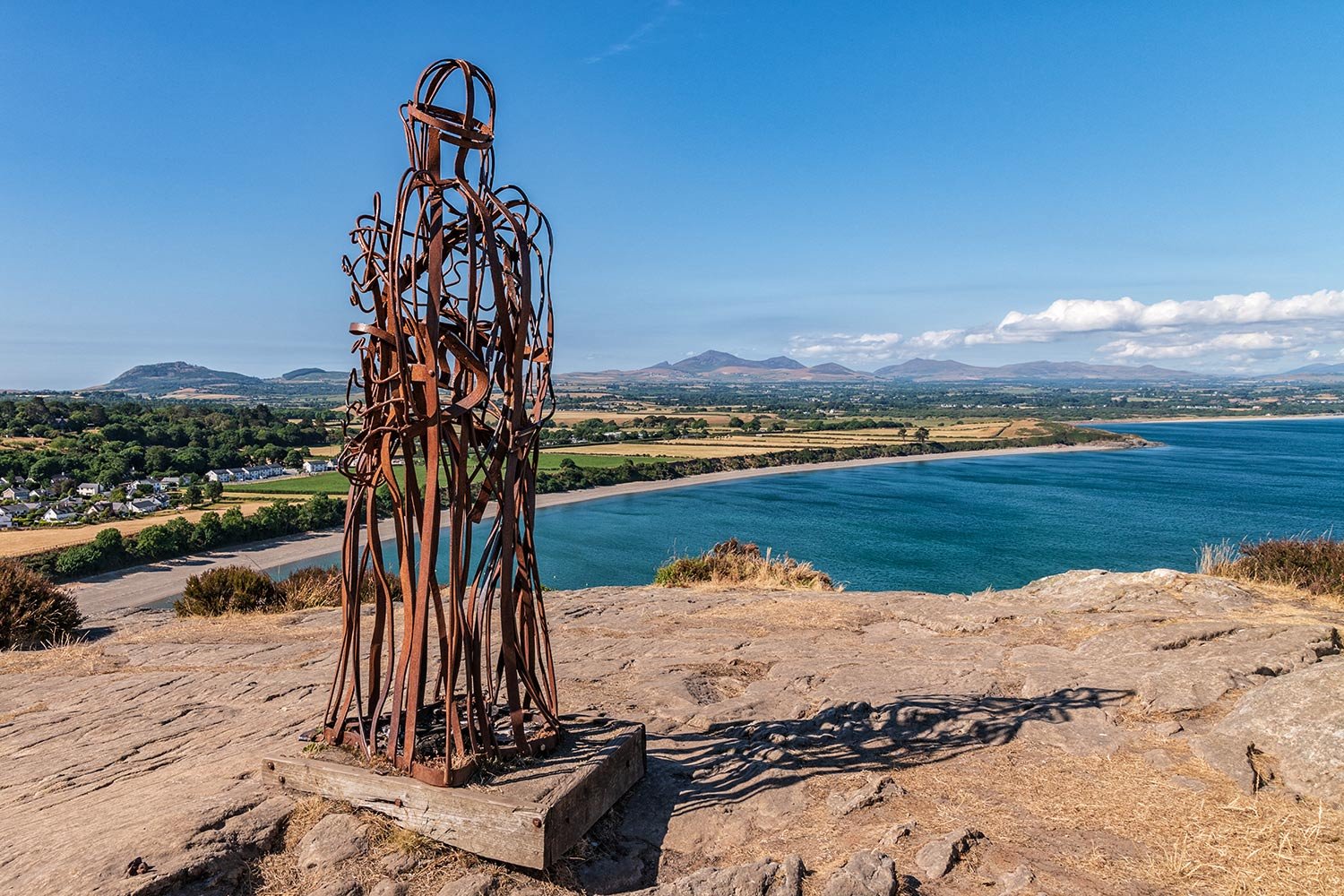
The Tin Man sculpture overlooking Llanbedrog beach
Whistling Sands (Traeth Porthor), Llŷn Peninsula
Whistling Sands Beach, also known as Porthor, is widely regarded as one of the best beaches in North Wales, making it a must-visit destination for photographers exploring the Llŷn Peninsula. Famous for its unique “whistling” sand—caused by the high quartz content—this secluded cove offers stunning opportunities for landscape photography, from sweeping coastal vistas to detailed textures under changing light conditions. Sunrise and golden hour are particularly rewarding, with soft light enhancing the turquoise waters and rugged headlands. Whether you’re capturing dramatic seascapes or tranquil shoreline scenes, Whistling Sands stands out as one of the best beaches in North Wales for both amateur and professional photographers alike.
How to get to Whistling Sands beach
Located near Aberdaron, reaching Whistling Sands involves a scenic drive along narrow country lanes; from Pwllheli, follow the A499 toward Aberdaron, then take local signs for Porthor. The nearest postcode for navigation is LL53 8LH, with a small National Trust car park nearby, followed by a short but steep walk down to the beach.
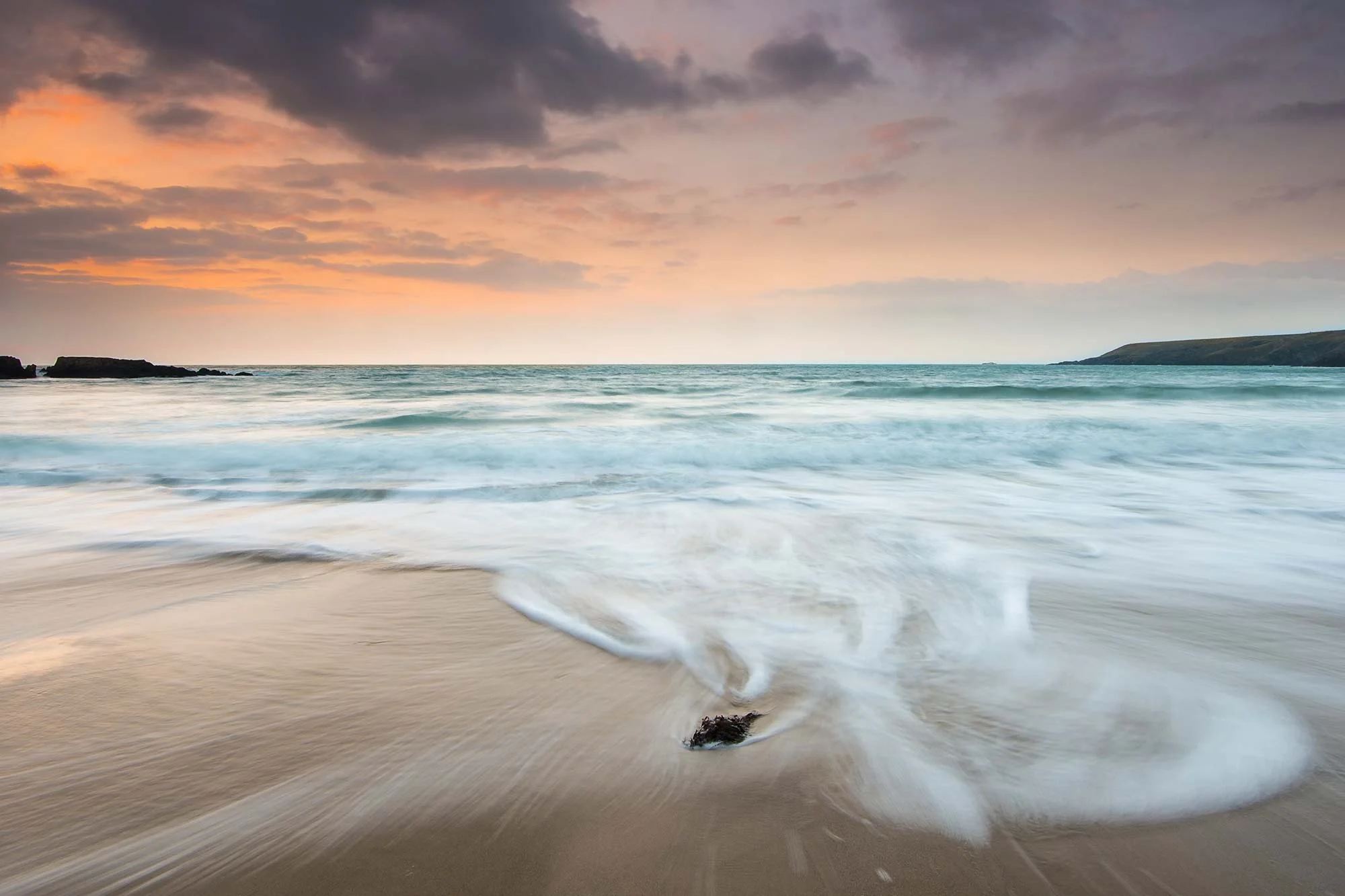
Golden hour light on the beach at Whistling Sands
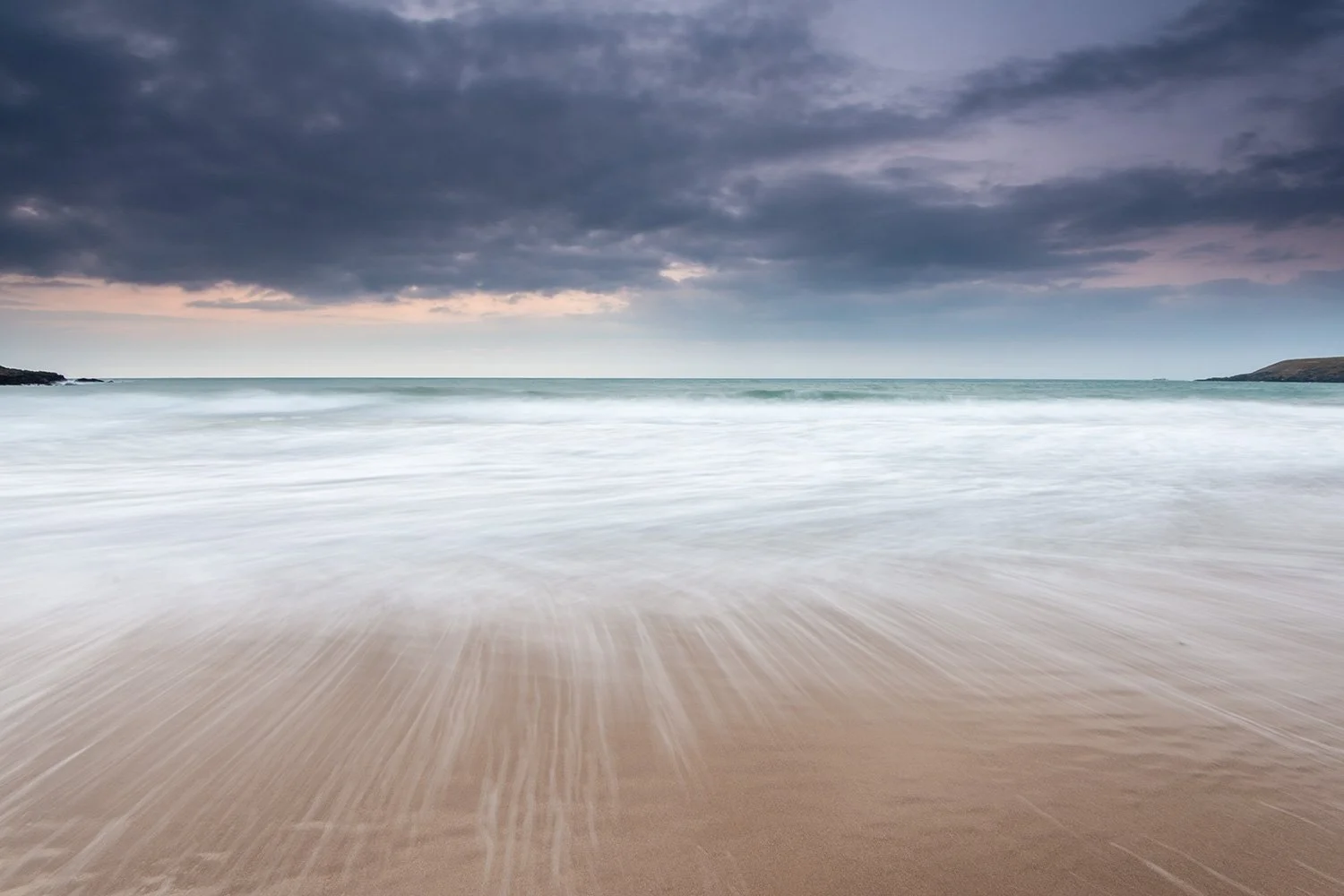
The receding tide at Whistling Sands (Porthor)
The beaches at Benllech and Red Wharf Bay, Anglesey
Red Wharf Bay and Benllech Beach on Anglesey offer diverse and photogenic coastal scenery ideal for both amateur and professional photographers. Red Wharf Bay is known for its vast tidal flats, golden sands, and ever-changing light, as well as the small, photogenic boats moored in the natural harbour. At low tide it’s perfect for capturing reflections, expansive seascapes, and dramatic skies - especially around Golden Hour when the bay glows with warm tones. Just a short distance away, Benllech Beach provides a more traditional beach setting with clear waters, sweeping shoreline views, and excellent foreground interest provided by large natural pools left behind by the outgoing tide.
How to get to the beaches at Red Wharf Bay and Benllech
To reach Red Wharf Bay, follow signs from Pentraeth; the nearest postcode is LL75 8RJ. For Benllech Beach, head toward the village of Benllech, with parking available near the shore at postcode LL74 8QE. Together, these locations showcase why Anglesey is home to some of the best beaches in North Wales, offering endless photography opportunities in all seasons.
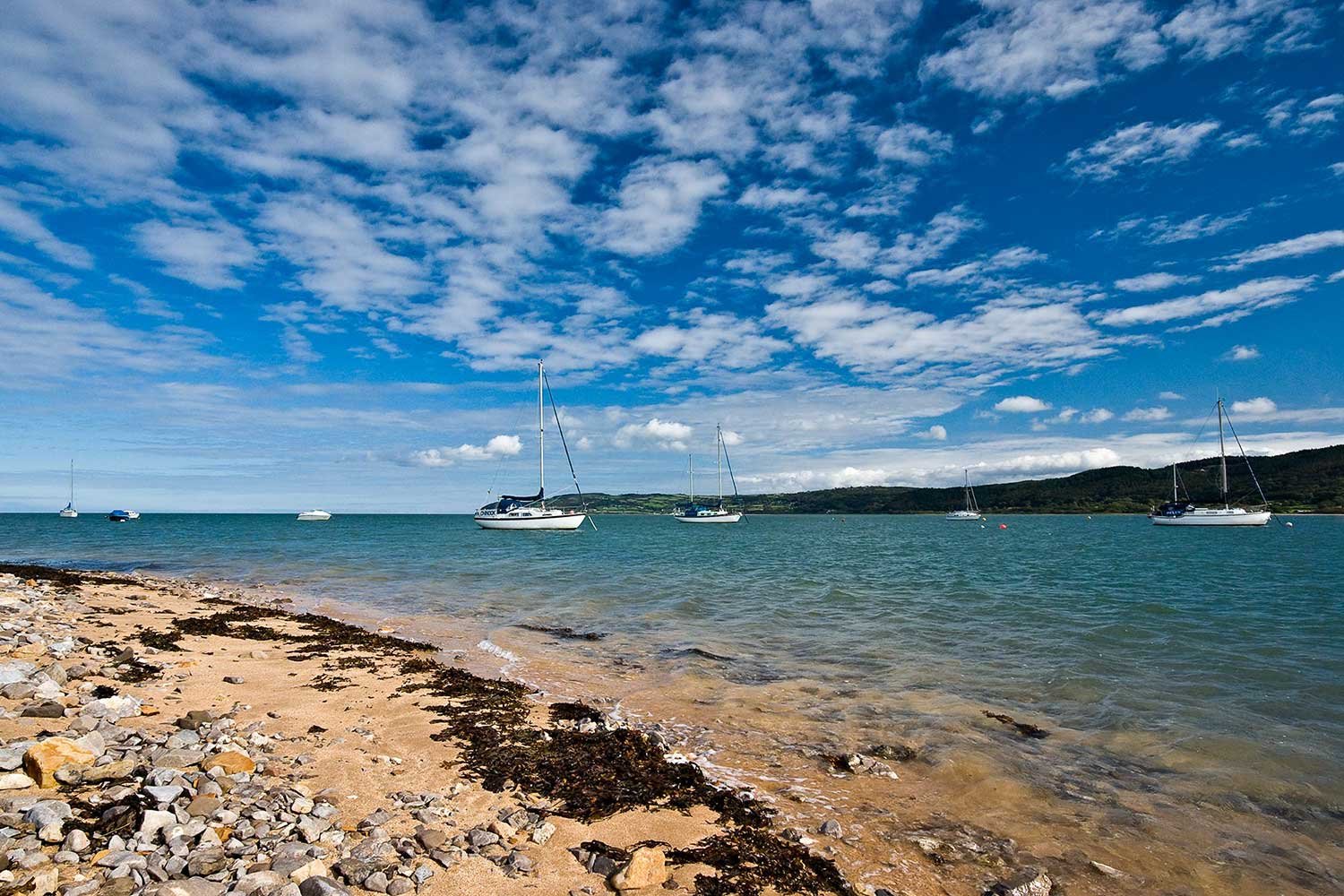
Stunning summer sky from the beach at Red Wharf Bay
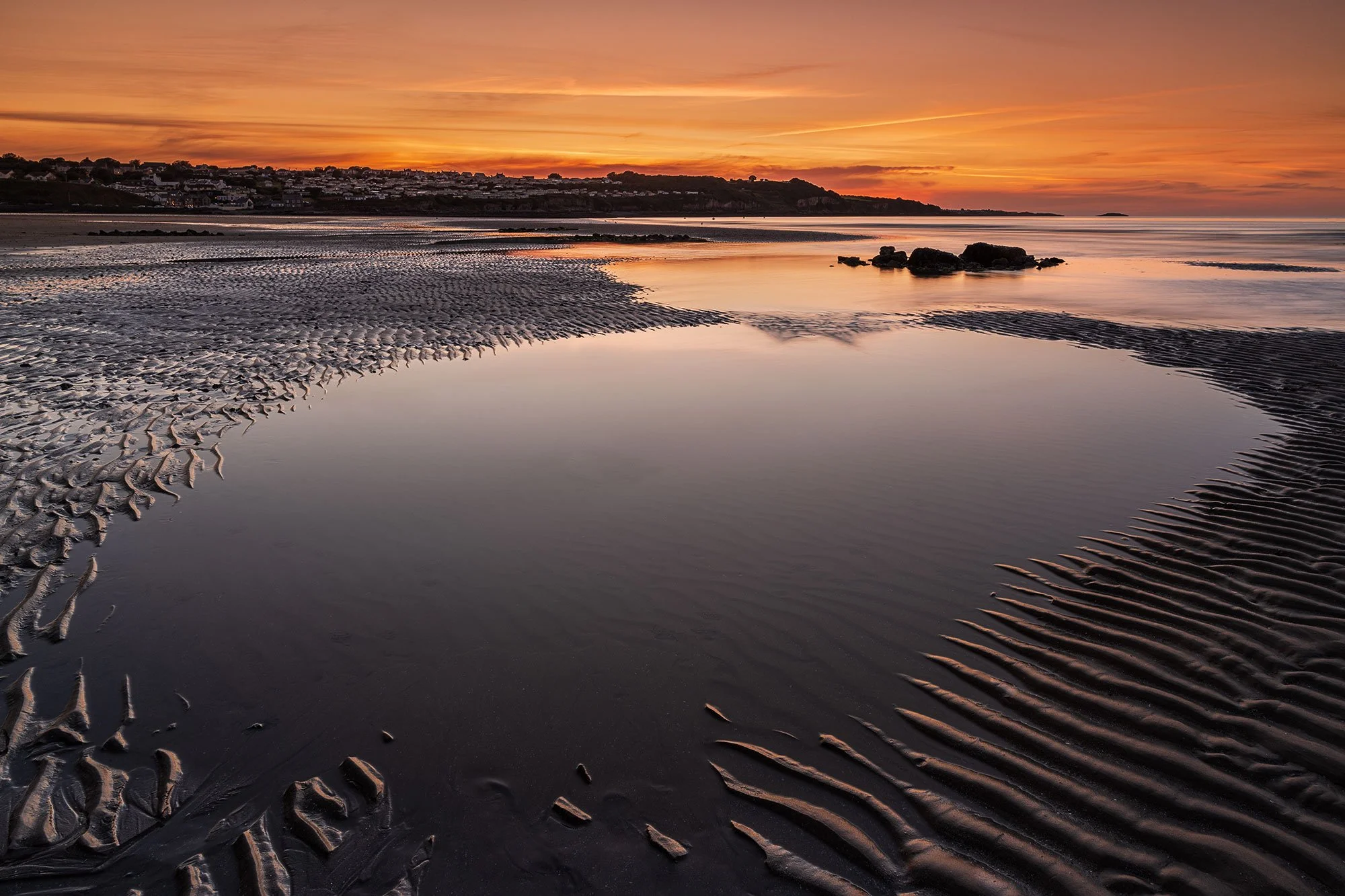
A beautiful sunset from the beach at Benllech, Anglesey
Some tips for photographing the best beaches in North Wales
Exploring the beaches in North Wales offers an incredible variety of coastal photography opportunities, from expansive sandy bays to rugged cliffs and secluded coves shaped by the elements. To capture these scenes at their best, plan your shoots around golden hour or blue hour for softer light and richer colours, and always check tide times—low tide can reveal leading lines, rock pools, and reflections, while high tide is ideal for dramatic wave action. Using a tripod allows you to experiment with long exposures (around 5–30 seconds) to create a smooth, misty effect on the water, while a polarising filter can reduce glare and enhance the natural blues and greens of the sea. Consider your composition carefully by including foreground interest like rocks or textures in the sand, and use natural lines to draw the viewer into the frame. With the right timing, equipment, and awareness of changing coastal conditions, photographing the stunning coastal scenery of North Wales can produce striking and memorable images in any season and weather conditions.
Browse The North Wales Photography Galleries
Eryri Snowdonia Photos
Anglesey Photos
North Wales Photos
Featured Products
Featured Products

Discover the most beautiful places in North Wales to photograph
Photographing North Wales is the most comprehensive guidebook for discovering beautiful places in North Wales to photograph. The guidebook will take you on a visual journey to some of the most breathtaking North Wales photography locations, from the rugged peaks of Snowdonia National Park to picturesque coastal villages and historic castles. Whether you’re a professional or hobbyist photographer, or a visitor looking for the best places to visit in North Wales, this guide will help you get the best from your trip.
Featuring over 300 high-quality colour photographs, this comprehensive guidebook details more than 100 of the best locations to explore and photograph across North Wales. Photographing North Wales covers a wide variety of breathtaking destinations, including the iconic Eryri (Snowdonia) National Park, the picturesque Isle of Anglesey, the historic villages and golden beaches along the North Wales Coast, the stunning Llyn Peninsula, and the picturesque countryside of Llangollen and the Dee Valley. Explore the rich culture of North East Wales, including Wrexham and Mold, and capture the scenic beauty of the heather-clad peaks of the Clwydian Hills.
With expert advice and photography tips, including the best times and techniques for photographing these stunning locations, you'll be equipped to capture unforgettable images of North Wales. The guidebook also provides detailed viewpoint information and full route directions to each location, helping you explore and photograph the very best of this diverse and photogenic region
Included with your purchase:
Free UK delivery
Step-by-step guidance to the best North Wales photography locations
Expert tips on how and when to photograph North Wales’ landscapes
Every copy is personally signed by the author.

A one day Anglesey photography workshop on the stunning Llanddwyn beach and Llanddwyn Island with the chance of photographing a sunset of the iconic Twr Mawr lighthouse.
Spend a day improving your photography skills in one of the most beautiful coastal locations in the UK. Explore the marram grass dunes of Llanddwyn Beach, Corsican pines of Newborough Forest and spend time photographing Llanddwyn Island including the chance of photographing sunset at the iconic view of Tŵr Mawr lighthouse with its spectacular backdrop of the Llyn Peninsula.